Skylight Installation in St Osyth
- Fixed quote before we start
- Roof never left open overnight
- 10-year workmanship guarantee

- Fixed quote before we start
- 10 years workmanship guarantee
- 25 years fitting rooflights
- Skylights only, not a general roofer
St Osyth takes the weather off the open sea with very little in the way. That changes which rooflight you should buy, at the level of the material the frame is made from rather than the brand on the label. Most disappointment on this stretch of coast comes from a unit that was well made and simply made of the wrong thing for where it ended up.
It is 18.2 miles from Ipswich, roughly 50 minutes by road. Far enough that we survey once, properly, and quote once.
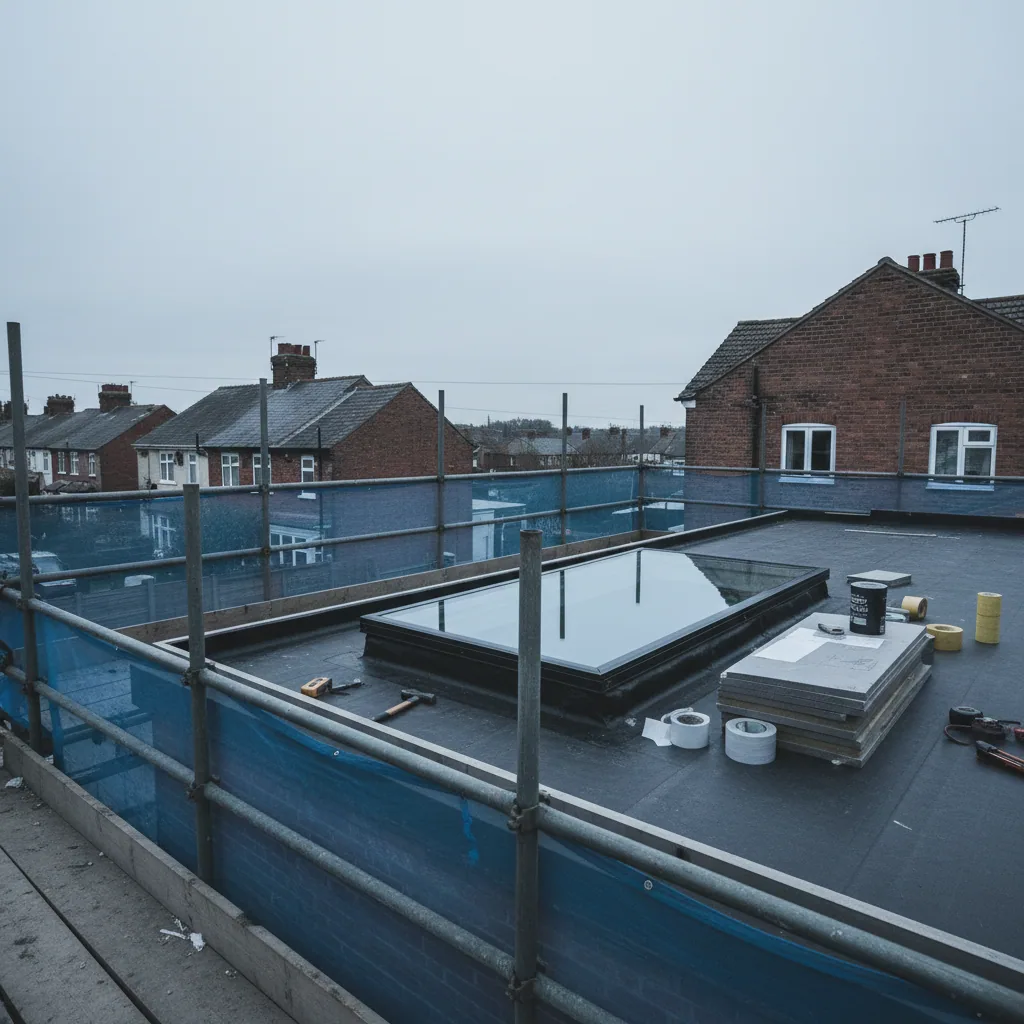
No frame material is immune. The spec is about matching it to the exposure
Worth saying plainly, because the marketing around rooflight frames implies otherwise. Every material degrades under airborne chloride and ultraviolet. What differs is how fast, in what way, and whether the failure is cosmetic or structural.
Thermally broken aluminium with a marine-specification coating
Our default for open coastal work. Aluminium forms a protective oxide layer, but the powder coating carries the corrosion protection at edges and fixing points. A standard architectural powder coat on this coast chalks within a few years, lifts at the edges, and lets filiform corrosion creep under the film from any scratch. A marine-specification coating is a different product with a different pre-treatment stage, and it is the one worth paying for here.
The thermal break matters separately. It is the polyamide strip separating the inner and outer frame sections, and without it the frame conducts heat straight out and condensation runs down the inside face in winter. People blame the glass. It is almost always the frame.
Timber and aluminium composite
Timber inside, aluminium cladding outside. Warm, good thermally, and the timber never sees weather as long as the cladding junctions are intact. That last clause is the whole argument. If salt water gets behind the cladding at a corner or a fixing, it sits against timber that cannot dry out and the rot is invisible until it is significant. On an exposed site this specification lives or dies on workmanship at the external junctions.
uPVC
Chloride does not attack uPVC. That is a genuine advantage on the coast and not a small one. What gets it is ultraviolet with thermal cycling. The surface degrades, the white goes chalky, and the material moves a lot with temperature. Large sections on an east facing roof expand and contract enough over years to work at the seal line. Reinforcement inside the profile is usually steel, and if moisture reaches it through a fixing penetration it corrodes where you cannot see it.
Fixings are not a detail. Whatever the frame is made of, the fixings are marine-grade 316L stainless as standard on every coastal job we do. Standard A2 stainless pits under chloride and you see it as white bloom and then rust weeping at each fixing point. A frame that outlives its fixings has still failed.
Glass and the seal edge, which is where units actually die
A sealed double or triple glazed unit fails at its perimeter seal long before the glass does anything. That seal is a polymer barrier holding the inert gas in and water vapour out. Three things attack it on the coast: ultraviolet through the edge of the glass, thermal cycling, and standing water in the rebate because the drainage path is blocked or was never adequate. When it goes you get misting, the gas fill has gone, and the U-value drops back towards single glazing.
What extends its life is unglamorous. A warm-edge spacer rather than aluminium, so the edge runs less cold and cycles less. A glazing rebate that actually drains, with paths not blocked by sealant. A unit set so no part of the edge seal sits in water. Get that wrong and the best glass in the catalogue mists in year six.
Why we survey the structure before quoting at St Osyth
The stock runs from ordinary village housing through to the lightweight seasonal buildings across the holiday-park belt, and those are structurally different propositions. Chalet and park-home construction often has shallow rafters, little ridge support, and coverings never designed for an opening cut through them. Some of it is fine. Some needs a trimmed and supported opening that costs more than the rooflight.
There is also the question of whether a lightweight structure can be made watertight around an opening to a standard that survives an easterly gale. Sometimes the honest answer is a smaller unit in a different position. We would rather say that at survey than discover it with the roof open.

What we fit here
Most St Osyth work is flat roof rooflight installation on rear extensions, pitched roof skylight installation on village stock, and energy efficient rooflights. Where an extension can carry one, a roof lantern is a genuine option, though the frame argument above applies with more force because far more frame is exposed.
We do not repair, reseal or patch. When a unit has failed, it is replaced, with the weathering detail and fixings redone to coastal specification at the same time.
St Osyth stock, from the Priory village to the holiday belt
St Osyth is really two places for our purposes. There is the old village around the Priory and the creek, with period and conservation stock, brick and pantile, set a little back from the worst of the weather. And there is the long holiday-park belt running down towards Point Clear and Seawick, a spread of chalets, park homes and lightweight seasonal buildings on the most exposed ground in the parish, much of it now lived in year round. The frame-material argument that runs through this page matters across both, but it bites hardest on the holiday belt, where a lightweight roof and full open-sea exposure meet in the same building.
That split is why a St Osyth job starts with what the building actually is rather than an assumed spec. A pantiled village house near the Priory and a park chalet at Seawick are different structures, different exposures and, often, different right answers on frame material. We survey the two the same way, but we do not price them the same, and we say which is which.
Frame materials on this coast, side by side
To put the argument above into one view, here is how the common frame materials behave on an exposed St Osyth roof. None is immune. The question is how each fails, and whether that failure is slow and visible or hidden and structural.
| Frame | Behaviour on open coast | Where it fails |
|---|---|---|
| Thermally broken aluminium, marine coating | Our default here. Slow, visible degradation when the coating is marine grade. | Coating edges and fixing points if a standard coat is used. |
| Timber and aluminium composite | Warm and strong, depends entirely on the external junctions. | Hidden rot if salt water gets behind the cladding. |
| uPVC | Chloride does not attack it, a real coastal advantage. | UV chalking, movement at seals, hidden steel reinforcement. |
Whatever the frame, the fixings are marine-grade 316L stainless as standard, because a frame that outlives its fixings has still failed. On the holiday belt the covering and the structure often decide the answer as much as the frame does, because a lightweight seasonal roof cannot always carry a heavy composite unit and cannot always be made watertight around a large opening in that exposure.
Park homes and seasonal roofs, honestly assessed
A good share of the enquiries down towards Point Clear and Seawick are on park homes and converted chalets, and those need an honest structural look before anything else. Shallow rafters, little ridge support and coverings never designed to be cut are common, and some of these roofs simply cannot take the opening a client first has in mind. Where they can, a smaller unit in a better position usually does the job. Where they cannot be made reliably watertight in this exposure, we say so rather than fit and hope.
The glass unit itself is worth a line, because on any frame material it is usually what fails first on the coast. A sealed double or triple glazed unit dies at its perimeter seal long before the glass does anything, and three things attack that seal here: ultraviolet through the edge of the glass, thermal cycling, and standing water in the rebate where the drainage path is blocked or was never adequate. When it goes you get misting between the panes, the inert gas has escaped, and the thermal performance drops back towards single glazing whether it looks misted or not. There is no repair for it. What extends its life is unglamorous and worth specifying: a warm-edge spacer rather than aluminium, so the edge runs less cold and cycles less; a glazing rebate that actually drains, with the paths not blocked by sealant; and the unit set so no part of the edge seal sits in water. Get those right and the best frame in the catalogue is matched by a glass unit that lasts, which on an exposed St Osyth roof is the whole point of specifying the assembly as one thing rather than a frame with a window in it.
Getting a price
Every skylight installation St Osyth job is surveyed on the roof and priced once in writing. The figure holds unless you change the specification. Installations carry a 10-year workmanship guarantee and are fitted to current Building Regulations by installers with 25 years in the trade, and we are experienced with VELUX, Keylite and Roto units.
We work the same coast at Brightlingsea, Clacton-on-Sea and inland at Great Bentley. The full list is on areas we cover.
Request a fixed quote for St Osyth. Tell us what the building is, because a village house and a park chalet are different jobs.
Which frame material lasts longest on the coast at St Osyth?
For open coastal exposure we normally specify thermally broken aluminium with a marine-specification powder coating and 316L stainless fixings. It is not immune, nothing is, but the failure modes are slow and visible rather than hidden. Timber-aluminium composite performs well thermally and depends entirely on the external junctions staying sound. uPVC resists chloride but degrades under UV and moves more with temperature. The right answer depends on the roof, the aspect and the size of the unit.
Can you fit a rooflight to a holiday chalet or park home roof?
Sometimes, and it depends entirely on the structure. Lightweight seasonal construction often has shallow rafters and no provision for an opening, so the framing has to be trimmed and supported before anything goes in. There are also cases where the roof covering cannot be made reliably watertight around an opening in that exposure. We look at the structure at survey and tell you honestly, including when the answer is a smaller unit somewhere else on the roof.
My rooflight has misted between the panes. Can it be resealed?
No. Once the perimeter seal of a sealed glazing unit has failed, the gas fill has gone and moisture is inside the cavity. There is no repair, and the thermal performance has dropped back towards single glazing whether it looks misted or not. The unit is replaced. On a coastal roof we replace the fixings and the weathering detail at the same time, because they have had the same weather.
uPVC does not corrode, so is it the best coastal frame at St Osyth?
It has one real advantage: airborne chloride does not attack uPVC the way it attacks metal. What gets uPVC instead is ultraviolet and thermal movement. The surface chalks, large sections move enough over years to work at the seal line, and the steel reinforcement inside the profile can corrode where a fixing has let moisture in. It is a legitimate choice on some roofs. On open-sea exposure we more often specify thermally broken aluminium with a marine coating, because its failures are slow and visible rather than hidden. The right answer depends on the roof and the size of the unit.
Thinking about this job? We survey across Ipswich, Suffolk and north Essex and give you a fixed price before any work starts, with a 10-year workmanship guarantee.