Skylight Installation in East Bergholt
- Fixed quote before we start
- Roof never left open overnight
- 10-year workmanship guarantee

- Fixed quote before we start
- 10 years workmanship guarantee
- 25 years fitting rooflights
- Skylights only, not a general roofer
East Bergholt is about 8.2 miles south-west of Ipswich, roughly twenty minutes down towards the Stour valley. It is Constable’s village, it sits inside the Dedham Vale National Landscape, and it carries a conservation area and a dense concentration of listed cottages. Very little of the older stock here can have a rooflight fitted on the basis of “it is only a small window at the back.”
We say that plainly because the alternative wastes everybody’s time. On a property like this, the sequence is consent first, product second. Ordering a unit before you know what will be permitted is how people end up with an expensive window sitting in a garage.
Three layers of control, and they stack
It is worth separating them, because people tend to treat them as one thing.
- Permitted development. The general rule allows a rooflight projecting no more than 150mm above the roof plane and sitting below the ridge. That is the baseline, and it is what applies to modern houses in the village that are neither listed nor restricted.
- Conservation area and Article 4. Designation can remove or reduce those permitted development rights, particularly on elevations visible from a public place. In practice a rooflight facing the street is treated very differently from one on a rear slope hidden behind a roof ridge.
- Listed building consent. This is the strict one. On a listed building, altering the roof needs consent regardless of size and regardless of visibility. A tiny conservation light on a rear slope that nobody can see still needs it. Visibility affects what an officer is likely to accept, not whether you need permission.
The National Landscape designation sits over the top of all of it. It does not create a separate consent, but it raises the weight given to visual impact on the wider landscape when an application is assessed. Roofs read strongly in views across the Stour valley, and that is not lost on the planning officers.
What actually gets approved
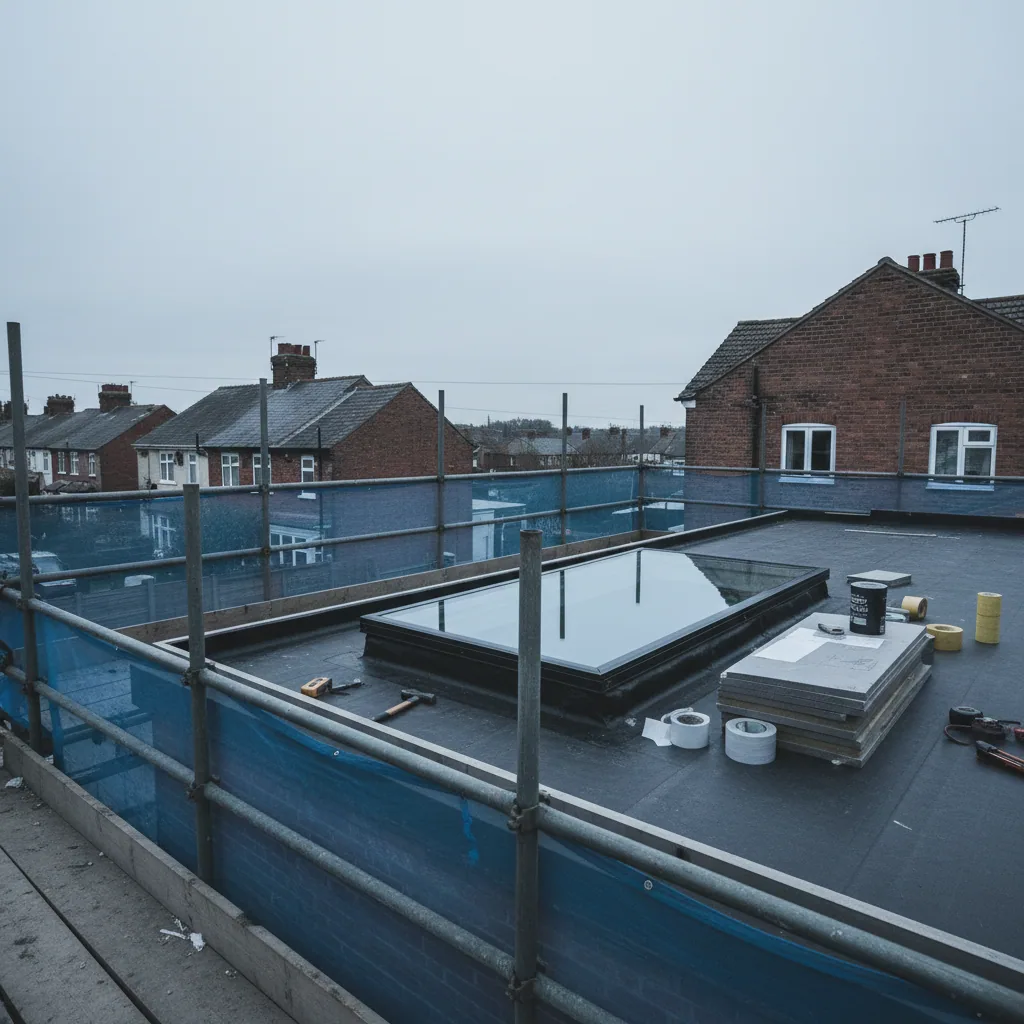
The unit that suits this stock is a conservation-style rooflight. The defining features are a frame that sits flush or near flush in the plane of the covering rather than proud of it, a slim profile in a dark finish, and a central vertical glazing bar so the light reads like a traditional cast-iron rooflight rather than a modern window.
Position matters as much as product. Rear slopes, slopes screened by the ridge from the road, and outbuildings tend to be accepted. Principal elevations facing the street or facing open views across the valley are the ones that draw objection. Scale matters too, and two small lights usually go down better than one large one.
Where the roof geometry produces an opening that no standard conservation size suits, and old irregular roofs do this constantly, a made-to-measure light through our custom skylight design service is usually a better answer than distorting the opening to fit a catalogue size.
Conservation units and Part L
A slim conservation frame leaves less room for a thermal break than a standard modern unit, so the glazing has to carry more of the thermal performance to reach the U-value Part L requires for a new opening. Some conservation ranges hit the figure comfortably on standard glazing and others need the upgraded option.
This is worth confirming before ordering rather than after, because a conservation unit is not a stock item you can swap in a fortnight. We check the declared figure against the requirement as part of the specification. The numbers are set out under energy efficient skylight installation.

The structure under a listed roof
Beyond the paperwork, old roofs here need the same care as any historic structure. Rafters at irregular centres, purlins running across the slope where they were needed, oak that is hard and full of old notches, and previous repairs hidden under the covering. Trimmer sizes have to come off the actual span measured on site rather than a table.
On a listed building there is often a preference, sometimes an explicit condition, for minimising loss of historic fabric. That points towards finding an existing bay wide enough to take a narrow unit without cutting a rafter at all. Hand-cut roofs have irregular spacing, so those bays exist more often than you would expect, and on a listed cottage it is the first thing we look for.
The covering is usually hand-made clay peg tile or pantile, irregular in size and camber, and pressed flashing kits do not seat properly on it. The detail gets dressed to the actual covering instead. Slower work, and the reason it stays watertight through a sustained driven-rain event.
Not every property here is listed. East Bergholt has plenty of twentieth-century housing where a standard pitched roof skylight installation applies with no consent needed at all. Check your property’s status before assuming you are in the hard category.
The planning route in practice, and how long it takes
East Bergholt falls under Babergh District Council for planning and listed building consent, and knowing how that process runs saves a lot of frustration. A listed building consent application, or a householder application where permitted development has been removed, runs to a statutory determination period that is measured in weeks rather than days, and on a sensitive site it can involve the conservation officer before a decision. It is worth starting that conversation early, because ordering a conservation unit that comes in fewer sizes and longer lead times, and then waiting on a decision, is how a straightforward job stretches across a season.
A pre-application enquiry, where the authority gives an informal view before you commit, is often worth it on a genuinely difficult frontage. It is not free and it is not binding, but it can tell you whether a proposal is worth pursuing before you spend on drawings. We are not your planning agent, but we have put enough rooflights on listed and conservation roofs around the Stour valley to say which slope and which unit tends to be accepted, and we quote for what is consentable rather than what looks best in a brochure.
Not the whole village, and the simpler jobs
It is worth repeating that East Bergholt is not uniformly old. The village has twentieth-century housing and modern infill where none of the listed or conservation constraints apply, and on that stock a rooflight is an ordinary permitted-development job with no application at all. A standard pitched roof installation, a unit sized to the structure, flashed into the covering, done in a day. The first task is simply to establish which category your property sits in, because the two ends of the village are entirely different jobs and people often assume the hard one applies when it does not.
What the survey looks at in East Bergholt
- The listing status and grade, and whether the property sits in the conservation area.
- The visibility of each slope from the street and from open views across the valley.
- The structure under the covering, rafter spacing, purlins and any clear bay that avoids cutting a historic timber.
- The covering, usually hand-made peg tile or pantile, and the dressed flashing detail it needs.
- On a conservation unit, the declared U-value against the Part L requirement in a slim frame.
A rooflight is often the only daylight you will get
On a listed cottage in a setting like this, the alterations that add daylight are heavily constrained. A new dormer, an enlarged gable window or a rooflight on a principal elevation are the kinds of change that draw objection or refusal, because they alter the character of the building or its contribution to the conservation area and the wider landscape. A discreet conservation-pattern rooflight on a rear or screened slope is frequently the one change that is realistically consentable, which makes it not just an option but often the only route to getting light into an upper room. That is worth knowing before you set your heart on something a planning officer will never accept, and it is the reason we look at the roof with that reality in mind and steer you towards the proposal that stands a chance. Getting that judgement right early saves an application that was never going to succeed, and the weeks of waiting that come with it.
Getting a price in East Bergholt
We survey on the roof, lift tiles where we need to see the structure, and tell you honestly what we think will and will not get through. Then we price once in writing and the figure holds unless the specification changes. Every installation carries a 10-year workmanship guarantee and is installed to current Building Regulations.
We work the Stour valley side through Capel St Mary, across to Dedham and down to Manningtree. The full list is on areas we cover.
Request a fixed quote for a rooflight in East Bergholt. Tell us whether the building is listed and which slope you have in mind, and we can usually give you a realistic view of the planning position before anyone comes out.
Our East Bergholt cottage is listed. Can we have a rooflight at all?
Often yes, with listed building consent and the right unit. What tends to be approved is a conservation-style light sitting flush in the plane of the covering, with a slim dark frame and a central vertical glazing bar, positioned on a rear slope or somewhere screened from public view. What tends to be refused is a modern white-framed window standing proud of the tiles on a principal elevation. We survey and tell you which category your proposal falls into before you apply.
Does being in the Dedham Vale National Landscape change anything?
It does not create a separate consent, but it increases the weight given to visual impact when an application is assessed. Roofs read strongly in long views across the Stour valley, so a proposal visible from open countryside gets more scrutiny than the same proposal tucked behind a ridge. It is another argument for putting the unit on a screened slope and keeping the scale modest.
Nobody can see our rear roof slope. Do we still need consent?
If the building is listed, yes. Listed building consent is required for alteration to the roof regardless of size and regardless of whether it is visible from anywhere public. Visibility affects what an officer is likely to accept, not whether permission is needed. In a conservation area on an unlisted building, visibility genuinely does matter more, which is why the rules feel inconsistent until you separate the two.
Can you fit a rooflight without cutting the old roof timbers?
Frequently, and on a listed building it is what we look for first. Hand-cut roofs have irregular rafter spacing, so there is often a bay wide enough to take a narrow unit with no cutting at all. That minimises loss of historic fabric, which conservation officers care about, and it keeps the structural work out of the price. Where the room needs more, we trim properly with sizes worked out from the real span.
How long does the planning side take in East Bergholt?
Longer than people expect, so it is worth starting early. East Bergholt comes under Babergh District Council, and a listed building consent application runs to a statutory determination period measured in weeks, sometimes involving the conservation officer before a decision. Add the longer lead time on a conservation-pattern unit and a simple job can stretch across a season if it is left late. On a difficult frontage a pre-application enquiry can tell you whether a proposal is worth pursuing before you spend on drawings. We quote for what is consentable rather than what looks best in a catalogue.
Thinking about this job? We survey across Ipswich, Suffolk and north Essex and give you a fixed price before any work starts, with a 10-year workmanship guarantee.